Monday, March 22, 2010

Thoughts in poetics

Being given the prompt to write about the function of poetry, of fiction, of nonfiction, and of philosophy and which works for the sympathetic imagination extended to animals”, my mind goes to the explanation of poetics by Aristotle. Aristotle wrote in length about his beliefs on poetry and how to read, regard, and examine the meaning. He also wrote on the expression behind the poetry, and in the words of Dr. Gunn “Human experience is much more complicated and vast than our ability to communicate it! Your daily life experience is more rich and vast than can be captured in a sentence …Writing poetry is a way of expressing and explaining feelings or experiences.” Aristotle wrote at length in Poetics his definition of poetry. I have found a good summary of this definition through Spark notes of Poetics. “He defines poetry as the mimetic, or imitative, use of language, rhythm, and harmony, separately or in combination. Poetry is mimetic in that it creates a representation of objects and events in the world, unlike philosophy, for example, which presents ideas. Humans are naturally drawn to imitation, and so poetry has a strong pull on us. It can also be an excellent learning device, since we can coolly observe imitations of things like dead bodies and…animals when the real thing would disturb us.” (http://www.sparknotes.com/philosophy/aristotle/section11.rhtml)

I believe poetry to be an outlet of expression. There are ideas that one can create in poetry that would not be conveyed as abstractly as fiction or nonfiction writing. I feel that poetry is the closest way to express the thought process behind a thought or idea. When you are pondering a thought in your mind, do you think in terms of structured sentences? I cannot answer that question for you, but for me my thoughts flow freely or in short spurts that do not contain the full idea that I wish to express to another.

Drawing back to the prompt, I believe that it is possible to express ones sympathetic imagination through all four facets; poetry, fiction, nonfiction and philosophy. On the topic of sympathetic imagination extended to animals, each rhetoric avenue has its strengths and weaknesses. It is the author who decides which avenue is best to describe or express the image and emotion he wishes the reader to gain from the reading. In my opinion, poetry allows the author to separate himself from the subject of the prose, and allows for the reader to develop an individual image from that. When reading Rilke’s poem The Panther, the passage of the animals will stands out. “His supple gait, the smoothness of strong strides that gently turn in ever smaller circles perform a dance of strength, centered deep within a will, stunned, but untamed, indomitable.”(665) I read a quite strength from the animal in the passage. The panther knowing it is en-caged chooses to keep its untamed will, though he shows a drawn out submission through turning in smaller circles. As it is with poetry, you may have developed a different image from this same passage. My point is that poetry entices the reader to form a mental image, thus the poets purpose is fulfilled.

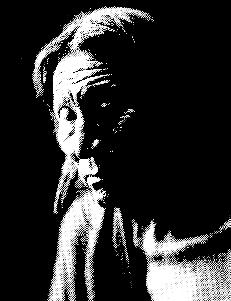
1. Jaguar staring out his cage

Ted Hughes writes about another caged animal in The Jaguar. There is a notable difference in the tone of this poem compared to The Panther. “He spins from the bars, but there’s no cage to him more than to the visionary his cell; His stride is wildernesses of freedom.” (668) The animal in this poem does not slow his stride within his cage. The panther, like the jaguar keeps his untamed mind. The difference being that the panther continues to keep freedom within his vision.

2. Black Panther staring into the abyss with cage out of focus

In Elizabeth Costello, the fictional character John Costello asks his mother, “but isn’t poetry just another kind of clever talk; admiring the muscles of the big cats in verse?”(103) I believe that Elizabeth had answered this question earlier in a lecture when discussing Hughes. “It is much like the mixture of shamanism and spirit possession and archetype psychology that he himself espouses. In other words, a primitive experience (being face to face with an animal), a primitivist poem, and a primitivist theory of poetry to justify it.” (98) Though this does not fit directly in with my overall theme, it does show that poetry inspires imagery, and thought upon the subject of the poem.

In the theme of imagery, Kafka captures this within his story of Red Peter. This fictional story brings the reader face to face with the speaker of the story being an Ape. Being a fictional story, the Ape has gained human insight and qualities of speech and character. This character is able to express his feelings of being caged and his thoughts on freedom. “As far as I am concerned, I did not demand freedom either then or today. Incidentally, among human beings people all too often are deceived by freedom. And since freedom is reckoned among the most sublime feelings, the corresponding disappointment is also among the most sublime.” (660)

3. Artist representation of Red Peter

It is difficult to explain the power of sympathetic imagination in specific terms. Sympathetic imagination can be described as "a person’s ability to penetrate a spatial barrier and enter an object for a moment of complete identification." (http://www.cwrl.utexas.edu/~bump/E603/web04/Katie/Portfolio/notes%20for%2011.2.htm) By using poetic tools, the reader is forced to create an idea or image in their mind to represent a meaning from the poem. The same is used with fiction writing as well, to gain insight from the point of view of the animal. The section I quoted above from Kafka is an example of the author giving voice to an animal to give their view of their world, or their side of a story. This cannot be so easily done with non-fiction. It is true that an ethnography can give insight onto the outside world that an animal lives in, but it does not capture the voice of the animal. The poems quoted above do not give voice to the animal, but it does take the reader into the cage with the animal or right outside the cage feeling the tension between the space the bars steal from the animals freedom. If time is taken to put yourself into the place of the animal inside of the cage, the bars will feel colder than steel. You might be able to feel your freedom taken away, and if you make that momentary identification you are closer to that animal in spirit than the trainer will ever be.


Images

1.http://cache.daylife.com/imageserve/07RF9ad00L5BC/610x.jpg

2. http://images.google.com/images?um=1&hl=en&tbs=isch:1&q=panther+cage&sa=N&start=54&ndsp=18

3.http://images.google.com/images?um=1&hl=en&tbs=isch:1&q=red+peter&sa=N&start=0&ndsp=18

Wednesday, March 10, 2010

great loneliness of spirit

After today’s readings, I am not sure what to write for my blog entry. Of course there were sections that I highlighted to return to once writing yet I can’t set my mind to the course of action of writing. Though the story was well written, I could not bring myself to enjoy the reading of Disgrace. Having many things in my personal and educational life bringing me down of late, I do not look forward to reading about cruel things that have been, or are being done to animals. I really disliked the end of the story (or at least our reading) after the main character builds a relationship with an unwanted dog, and realizing the dog had also formed the same connection. “Bearing him in his arms like a lamb, he re-enters the surgery. ‘I thought you would save him for another week,’ says Bev Shaw. ‘Are you giving him up?’ ‘Yes, I am giving him up.’” (687) Though this was a difficult task for David, and he continues to reflect upon the mental hardships he faces putting these animals down, he put down the one animal that he had made a connection with because of his disability. I have many personal qualms with the persecution of people and animals with disabilities. I have many problems myself that I do not view as disabilities, along with my constant companion Jazz (14 year old cockatiel) who can no longer fly. I agree with Barbara Smuts “while few of us can travel to Africa to live with wild baboons, most of us have the chance to develop a bond with a member of another intelligent, social species…”, with my bond being with Jazz.(652) The topic of disability is one that I will save for another day.

"Hope is a dog born without front legs. A dog barely mobile. Gentlemen, we can rebuild her. We have the technology. We have the capability to build the world’s first bionic puppy. Hope will be that puppy. Better than she was before. Better, stronger, faster.

This two-legged Maltese puppy gets around by using a specially-designed device using wheels from a model airplane. From birth, she was able to get around hardwood floors with ease by pushing off her back legs. However, doctors said that her natural mode of moving eventually would damage her bones and spine. This led them to creating The Six Million Dollar Dog." 1.

Already being into the middle of my blog entry, I realize that I have made this a more personal “journal entry” than a blog. The next blog entry should be back along my usual writing style…

I also realize that I do not have much to say in the way of expressing my opinions, or reactions to the readings. They were another element of my day that brought me down. In continuing with not saying much in my own words I will finish this lonely blog entry with quotations relating animal cruelty.

“Auschwitz begins wherever someone looks at a slaughterhouse and think: they’re only animals.”—T. Adorno. (725)

“The question is not, Can they reason? nor, Can they talk? But rather, Can they suffer?”- J. Bentham (727)

“The soul is the same in all living creatures, although the body of each is different.” –Hippocrates (726)

“There is no religion without love, and people may talk as much as they like about their religion, but if it does not teach them to be good and kind to beasts as well as man it is all a sham.” – A. Sewell (728)

“Heaven goes by favour. If it went by merit, you would stay out and your dog would go in… man is the only creature that inflicts pain for sport, knowing it to be pain.” – M. Twain

“The Earth does not belong to man; Man belongs to the Earth. This we know. All things are connected like the blood which unites one family. Whatever befalls the Earth befalls the sons of the Earth. Man did not weave the web of life, he is merely a strand in it. Whatever he does to the web, he does to himself… What is a man without the beasts? If all the beasts were gone, men would die from great loneliness of spirit, for whatever happens to the beasts also happens to man.” –Chief Seattle. (729)

Chief Seattle 2.


Images:

1.http://www.gearfuse.com/the-six-million-dollar-dog/

2.http://mclane65.tripod.com/native/chief_seattle.jpg

Monday, March 8, 2010

a metaphor

Reading about the holocaust a forgotten memory emerges from a grade school class in west Texas. We had finished reading number the stars, and were engaged in a discussion about the book and the story. The teacher was young and full of energy, and if I remember correctly it was her 2nd year to teach. She made an observation about the classroom of students that I will never forget. While discussing the section of the book where the main characters friend is poised as have dead sister (due to her late sisters hair and eye color), she remarked how many students in the classroom could be mistaken as Jews during that time period. (I think she was not thinking about what she was saying as she spoke). She pointed me out to the class along with another girl and stated, “Look! Sarah and Candice are both blonde with light eyes; they could have passed for Germans.” I analyze this remark, as I do most topics in this class to be a sign of the times. People are hard pressed to ignore the reality of a situation in the present and from the past to be able to bypass what they believe to be unnecessary empathetic emotions. This can go hand and hand with relating the holocaust to factory farming. Millions of animals are slaughtered, being chosen for their demise based on the form they were born into. J.M. Coetzee quotes from his mothers’ lecture, “Though I have no reason to believe that you have at the forefront of your minds what is being done to animals at this moment in production facilities… I will take it that you concede me the rhetorical power to evoke these horrors and bring them home to you...We have only one death of our own; we can comprehend the deaths of others only one at a time.” (63) She continued in her lecture to address the holocaust and the absence of concern from those living near to concentration camps stating, “They might have known, in another sense they did not know, could not afford to know for their own sake...because of a certain willed ignorance on their part.” (64) The fact is that people in a sense know what was going on around them in Germany and Europe the same as people knowing where their food comes from; the fact is they choose not to address this ethical dilemma and continue living in the dark.


1. Miami Beach Florida Holocaust Memorial


In this modern world people want convenience, and shelter; shelter from the horrors faced by those who came before us. In this current world, people have been affected by the recession. They have chosen the word recession as to not relate to the great depression. Though circumstances and the times are different, the fact remains that people have/and are suffering. Regarding my teacher in grade school, she did not live during World War II, therefore has no direct contact to the emotions felt for those affected. Her words seemed cold to me at first, and I am sure to you the reader, but if we take a closer examination on her knowledge reference she did not see what was wrong with her statements. Though she was informed about the holocaust, the direct images were not in her memory frame of reference. To quote Coetzee from his book Elizabeth Costello in regards to understanding another’s point; “the problem of calling evil a problem,… because a limit has been reached, the limit of what can be achieved with a body of balanced, well-informed modern folk in a clean, well lit lecture venue in a well ordered… city in the dawn of the twenty-first century.” (175) The modern person cannot relate to the actions of others, since they have not given time to ponder of the implication actions of others. A modern person finds a hard time relating to the actions of the Nazi’s yet they do not see the correlation in their actions against animals. Animals are literally being lead to the slaughter without any chance of speaking out against these actions. They have been pulled aside and marked for death for the body they process, all the while to serve the hungry appetites of humankind.


2. May 14 2009: Pigs are piled into the back of a truck before being slaughtered and buried on the outskirts of Cairo.... government continued its plans to slaughter 300,000 animals. (http://www.washingtonpost.com/wp-dyn/content/gallery/2009/05/18/GA2009051801392.html)


You are probably asking yourself, “Is she really relating the holocaust with the modern factory slaughter of animals?” and my answer for this blog is yes. David Sztybel explains the correlation in his article Can the Treatment of Animals Be Compared to The Holocaust?
“’Holocaust,’ originally denoted ‘a Hebrew sacrifices in which the entire animal was given to Yahweh [GOD} to be consume with fire’ (Sax 200, 156). In a twist of history, then, a form of animal exploitation became a metaphor for what happened to the Jews at the hands of the Nazis. It is asked if the Holocaust can be compared with animal exploitation, even though the very term involves such a comparison, albeit metaphorically.” (732) Animals are being oppressed for how they look, think, and feel without being given the chance to just exist. Humans have been around only a fraction of time in the grand scheme of things. What gives us the right to overtake the lives and existence of other creatures that have populated this planet longer than us? It is true that animals eat other animals, and I do not find fault with humans eating meat. What I find fault with is the nature by which we prepare and consume our meat. Meat in modern times is not from the spoils of the hunt, but rather the all mighty super sized combo wrapped in a nice yellow wrapper.


Does this photo need a caption? Does a person need a hamburger this size? No! Or any proportion of food this size? NO. Is this what a single animal died for? Yes.


Images:

1. http://photos.igougo.com/images/p395354-Miami_Beach-Holocaust_Memorial.jpg

2. http://www.washingtonpost.com/wp-dyn/content/gallery/2009/05/18/GA2009051801392.html

3.http://www.grimmemennesker.dk/ugly-people-74.htm

Wednesday, March 3, 2010

to amuse sentimental dreamers

The lessening of human suffering is a mere dummy set up to amuse sentimental dreamers... –Lewis Carroll (543)

In a modern world, we are subjected everyday to images of death and violence on national television networks. I have personally seen images of gruesome images from police crime/accident scenes from family and friends of my family in law enforcement. There is a human curiosity with violence and death, as manufactured by media networks. Long gone are the times were you could turn on a news network station and view family programming, along with images on people and animals alike spending the day together at a city function. Sex and violence sells, and that is what seems to keep this perpetual system going. The more these images flood our entertainment activities, the more the public craves. In relation to this animal humanities course, images that do not surface often are of animals in these same scenarios. The images of animals being rescued, or advertisement to rescue animals are the extent that we exposed to the suffering of other creatures that we share this planet with.

Scientists and student researchers on the UT campus have conducted experiments on animals to further feed our fascination with sex. A student that had conducted an experiment in the Animal Research Center at the University of Texas wrote about his experience experimenting on quails to better understand the novelty of sex. His experiment “investigated the copulatory (sexual) behavior of Japanese quail and its effects on learning and memory” (553). To accomplish his task, he was forced by the nature of the experiment to practice vivisection, as to not corrupt chemical data. He writes that “The subjects did not receive sedation or anesthetic as those chemicals would conflict with the aims of the experiment” (553). Once the experiment had been completed, and the animals killed to feed the data, the published results of course left out the avenue taken to get the data for the research. The purpose of the experiment was to show “novelty diminishes the effect of sexual experience in male Japanese quail” (554). This student follows his recounting of the experiment with stating “as a former researcher, I am not uniformed. Moreover, given my appreciation for both sides of the animal rights debate, I do not consider myself a fanatic… While I appreciate the need for animal research, I completely disagree with vivisection” (555). Another student researcher reflects "there probably never exists a point at which I will become numb to these sites..." and I hope this thought stays with him/her (558)

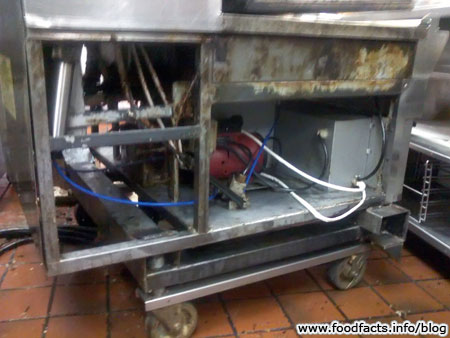
For the human curiosity in the subject of sex, why not experiment with humans? This is a novel idea for if we were to suggest testing the novelty diminishing the effect of sexual experience with human males, the masses would be excited to find out the results. Behind the curtain however, would scientists be able to conduct their experiments without feeling pity toward the poor souls that would be killed after a sexual experience. The public would find outrage if they knew that people were killed to get these results. So why is it that the testing on animals, especially using the method of vivisection to get results for medical publishing, go unnoticed? The reason is simple, we enjoy the convenience of going to a bookstore and purchasing a magazine to learn new information and not knowing what goes on behind the curtain. How many Americans would daily drive thru McDonalds for their daily lunch if they saw how their food was prepared in the kitchen? I realize this is a far cry for a decent analogy for the torturous killing of animals, but what else do I have in my arsenal of shared experiences that would make the average/blind American to think about this point?

The author of the Alice children’s book series wrote an article for Fortnightly Review entitled “Some Popular Fallacies about Vivisection” in 1875. So to the informed human, the issue of vivisection has been around for many centuries already. In this article, Carroll takes time to “attempt to formulate and classify some of the many fallacies, as they seem to me, which I have met with in the writings of those who advocate the practice”(541). He takes time to address thirteen fallacies that he has come across. The major problem today, as it was in 1875 is the dis-understanding of the practice. As I have stated before, the fact that the images and practices being kept behind the great green curtain of OZ. Animals suffer just as humans do, for are we not akin to others that share most of the same genetic code? Carroll writes in 1875, “For does it not presuppose the axiom that human and animal suffering differ in kind? A strange assertion this, from the lips of people who tell us that man is twin-brother to the monkey” (542). So why not the experimentation on humans? I do not, or will I advocate vivisection on humans, but the question makes you think about your own mortality. “Modern animal researchers… believe they are above moral obligations” (549). So what would this scientist say about experimenting on a fellow human? He might make a statement much as Carroll suggests; “He will tell you that this is merely a question of relative expediency,--that, with so feeble a physique as yours, you have only to be thankful that natural selection has spared you so long” (548).


It is not well known that human vivisection has occurred. See the images of children for yourself.


Images

http://www.health.org.nz/victim.jpg

http://www.cartoonstock.com/newscartoons/cartoonists/mbc/lowres/mbcn570l.jpg

http://foodfacts.info/blog/uploaded_images/mcdonalds-grill-clean.jpg

http://www.animalliberationfront.com/Philosophy/Animal%20Testing/ThisisVivisection.jpg

http://www.health.org.nz/victim.jpg

Sunday, February 28, 2010

as it isn't, it ain't. That's logic

"Contrariwise... if it was so, it might be; and if it were so, it would be but as it isn't, it ain't. That's logic"-Lewis Carroll


I have always been interested in the story of Alice, as in Alice in Wonderland and Through the Looking-Glass. I saw the Disney version of the story when I was much younger, and the main characters still stick in my mind years later. The caterpillar spelling his words in smoke, the smile of the Cheshire cat, and the humpty dumpty looking twiddle dee and twiddle dum are images still in my mind. The reading selections from the Alice series by Lewis Carroll left me confused, and wanting the whole story. When I have the time, I do plan on straightening out the story by reading it whole.


While reading these selections, there was a strong theme that seemed evident to me of being lead to the slaughter. A past student of Professor Bump touches on this subject when writing about Alice’s inner turmoil when presented with the story of the Walrus and the Carpenter. Alice, like most others would relate to the characters of the Walrus and the Carpenter instead of the oysters. A former student writes that the oysters “were taken from their beds with ill intentions, were befriended under false pretenses, and heartlessly eaten by someone they trusted” (535). The oysters were lead out of their beds, “all eager for the treat” and were treated with kindness to only become the meal of the leaders. Once the oysters realized their new friends’ intentions “the Oysters cried… after such kindness, that would be a dismal thing to do!”(513) Instead of running away, their fears were turned away with quite words from the Walrus turning their attention to the night.

This theme of seduction is also found in a poem Alice recites to herself while pondering if she had changed. The poem, though a parody of a popular poem at the time reads: “How cheerfully he seems to grin, how neatly spreads his claws, and welcomes little fishes in, with gently smiling jaws” (467). The crocodile smiles as he seduces his food straight into his mouth.

Carroll plays with themes of seduction in relation to animals seducing other animals to become their food, and the seduction Alice feels as she tries to navigate the strange and erotic world of Wonderland. Throughout the story she is faced with decisions, and the question of “who are you” posed by the caterpillar (479). She was originally seduced with the question of where the rabbit was going when she fell into the rabbit hole.

I think the theme of seduction is best reflected in the modern version of Alice in the SYFY channels original movie series, ALICE. In this new modern retelling, people are seduced into Wonderland through the looking glass. Once in Wonderland they are referred to as oysters, and are enticed to a giant casino. Once there they are captured, so to speak, and the queen feeds/captures their emotions. Once drained of their emotions, these people are empty shells that are disposed of. I plan on writing in greater detail the themes taken from the Alice stories and how in this modern re-telling themes are shaped into images that the modern reader/viewer can appreciate in this different world. 1.


As a side story, I came across a lamb farm with a name taken straight out of the Alice stories. The “Twiddle Dee Farm” in NC, boosts of “Animal Welfare Approved lamb products that are available at a select retail grocery that values humane treatment of animals; supports local, grass-fed lamb growers; and is willing to compensate farmers fairly”2. Haven taken their name from the story of Alice, and after I have seen “Earthlings”, I’m not so sure that I can believe their claims.


1. ALICE, SYFY channel. http://www.syfy.com/alice/summary.php
2. http://www.animalwelfareapproved.org/2009/10/08/twiddle-dee-farm-clinton-nc/


Photos:

Video:

Friday, February 26, 2010

icons


Wednesday, February 24, 2010

Eating animals

I have never taken as much time as I do now to think about what I eat. This class has opened my eyes to the secret world of factory farming, though the secret isn’t kept so hidden. It is easier not to think about the behind the scene processes that take place to make a more convenient world. I am referring not only to factory farming, but to all things that are produced for mass consumption. There is a fetishism associated with products, for example shoes. In terms of food, it could be said that there is fetishism toward hot dogs being related to a baseball game. The reason behind this is the lost of the labor processes. Would a product such as a shoe have so much power if each person stopped to think about the children in third world countries that work for pennies a day to put together that all mighty pair of athletic shoes that you see in the store window? The same goes for the factory farming industry. Americans especially do not think about where the meat for the hamburger that they are about to buy from a national chain comes from. That is the furthest thing from their minds.

I will admit to being in this group once before. It is all in the convenience of sitting in your car, ordering, paying and driving away from the window with a meal conveniently in a bag ready for consumption. The behind the scenes are obscured from our vision by marketing, colorful signs and packaging. Do you really think that “the happiest cows come from California”? “Some words,… like happy, mean the opposite of what they would seem. And some, like natural, mean next to nothing” (pg. 603/45). We choose not to think about the lives of the animals that feed us, for fear of feeling shame for adding toward the mass demand for more. These “happy” cows from California, aren’t so from what I have seen in clips from Earthlings. “Milking cows are kept chained to their stalls all day long, receiving no exercise… Eventually milking cows… collapse form exhaustion. Normally, cows can live as long as twenty years, but milking cows generally die within four. At which point, their meat is used for fast food restaurants” (Monson, Earthlings screenplay, pg. 573) So these the happy California cows are yet another marketing ploy to obscure the consumers view with images to cover the truth behind milk, and the meat used at fast food chains. “Shame is what we feel when we almost entirely—yet not entirely- forget social expectations and our obligations to others in favor of our immediate gratification” (Shame pg. 600/37).

When Jonathan Foer was retelling his story of taking his son to the aquarium, I remembered a memory from my past. When I was around 4 years old, my father cooked shrimp for dinner. This was the first time that I had seen a shrimp and I wasn’t excited about the concept of eating something other than macaroni and cheese. To try and get me to try this new food, he referenced a favorite movie of mine, The Little Mermaid. He said “these are mermaid food”. In my mind, I thought he meant the we made of Mermaids… Long story short, I wouldn’t touch seafood for many years after that. “The shame of parenthood—which is a good shame—is that we want our children to be more whole than we are, to have satisfactory answers”. (pg. 602/40) In my case, my father could not explain the meaning of his words in a way that would convince me (at the time) that shrimp were not made out of mermaids.

In this new fast paced world, where the restaurant that can deliver food the fastest wins the most customers, when will the masses step back and look at the realities of the world around them. In Iowa, “a company said it fired the manager of a hog farming operation where workers were videotaped abusing pigs… a video released… depicts workers hitting sows with metal rods, slamming piglets on a concrete floor and bragging about jamming rods into the anuses of sows” (The associated Press, October 24, 2008/ pg. 695) The stories continue, and pile up one after the other over the treatment of these animals. Though humans have eaten meat since our existence, it wasn’t until the industrial revolution that hunting and farming turned into sport and industry. “The details are important, but they probably won’t, on their own, persuade most people to change. Something else is needed” (Foer, pg. 599/35).

Warning. The following Video Contains images that may be too realistic and eye opening for some viewers.


Images: